Blog

Can Acupuncture for Digestive Problems Help With Nausea and Stomach Upset?

Nausea and an upset stomach can make a regular day terrible. You might be dealing with everything from bloating and the discomfort of a stomach doing somersaults, to just feeling that your stomach is something that is wobbling around unsteadily. While Acupuncture for digestive problems may help manage certain symptoms, this uncomfortable feeling typically does not last long, although it can still be quite unpleasant.

Acupuncture is an alternative to medication for nausea. This therapy uses fine needles to stimulate specific points on the body to help relieve feelings of discomfort. Scientific research has examined acupuncture’s potential to alleviate nausea and various stomach issues with mixed results, depending on the condition and individual factors.

In this article, we review acupuncture’s role in nausea and upset stomach, outline what to expect during treatment, and offer guidance on seeking professional care.

Why Do Nausea and Stomach Upset Happen?

There are many causes of nausea or general stomach upset. Overeating, late dinner hours, excessive snacking, consuming spicy foods, emotional stresses, and acid reflux are some of the leading reasons for upset stomach and distension. Nausea and upset stomach caused by drugs, infections, allergies, and some medical conditions are also causes. Nausea associated with pregnancy is another common occurrence.

Knowing what to look for is helpful when you are seeking solutions. For instance, are you experiencing these sensations after eating? Does stress make them worse? Such observations can help a healthcare professional identify possible triggers.

Acupuncture for digestive problems and similar conditions is one integrative approach. Nevertheless, if an individual feels this way all the time or if it continues to be an issue, a biomedical doctor should be consulted.

How Does Acupuncture Address Digestive Symptoms?

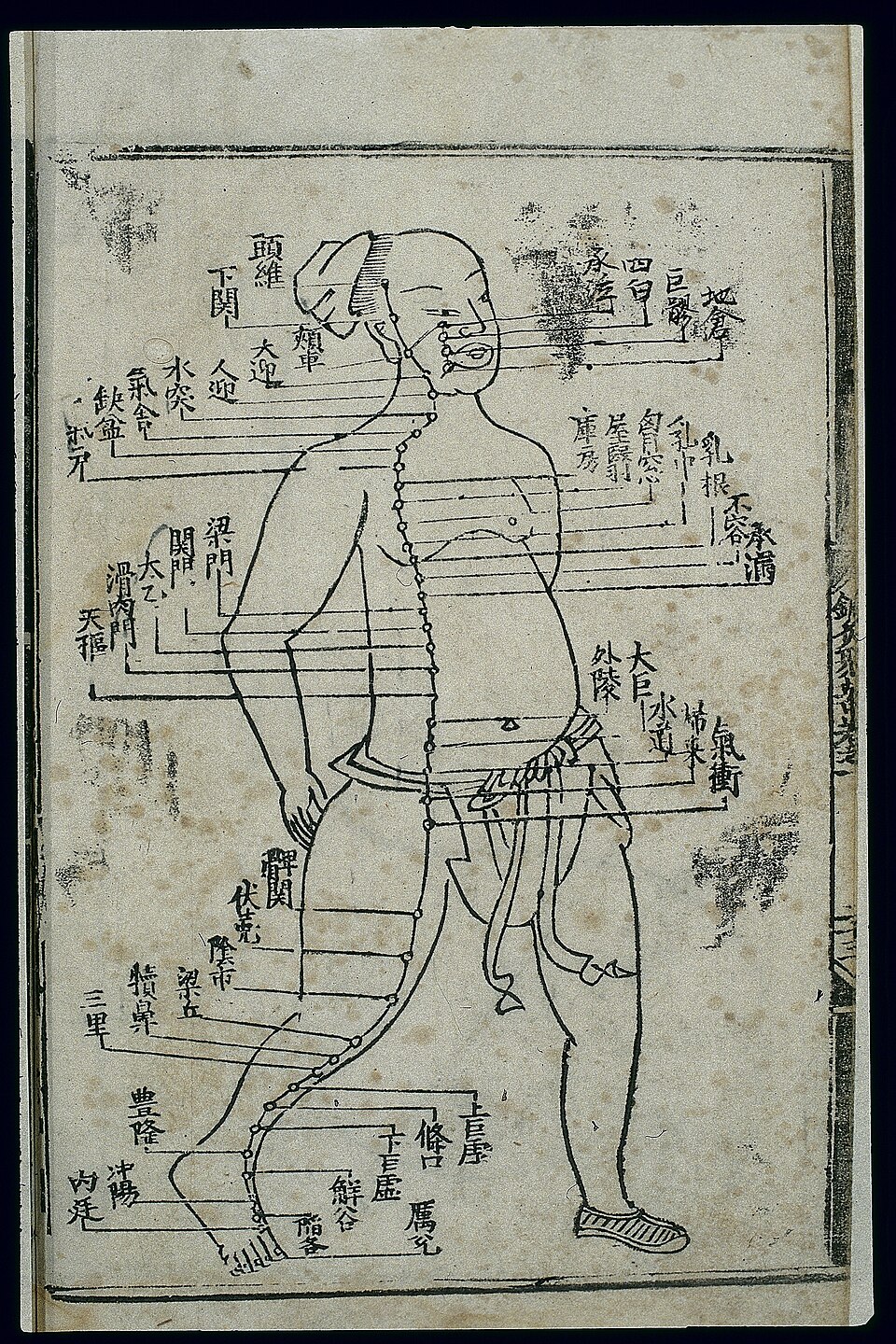
Acupuncture needles are inserted at various points on the body, with locations used based on several factors, including the condition being treated and the particular practitioner. Patients new to acupuncture are often surprised to find that the most effective acupoints might be far from the location of the symptoms—for example, acupoints on the foot, as shown by this ancient diagram of the Stomach meridian, can be helpful in treating nausea.

[Note from Sybil: Wikimedia Commons image attached]

Clinical trials have demonstrated that needling specific acupoints on the body effectively alleviates nausea experienced by patients receiving chemotherapy and after surgery. This seems to be a useful aspect of a comprehensive post-surgical recovery and chemotherapy management program.

The stimulation of nerves, muscles, and connective tissue is believed to help relieve pain and improve digestion. Researchers are studying how acupuncture affects the activity of the nerves and hormones that are involved with digestion. Acupuncture is an integrative treatment to help manage nausea and digestion alongside your regular source of medical care.

What Happens During an Acupuncture Session?

Before any acupuncture can begin, a process of evaluation according to Chinese medical tradition must occur. How does this happen? First, the practitioner looks at the tongue to discover clues about digestion, hydration, circulation, and the function of various internal organs. (Yes, the tongue contains a map of the entire body!) Next, the practitioner palpates the pulse on both hands—according to tradition, the pulse reflects information about 12 different organs. Dr. Ihrig also makes extensive use of abdominal palpation, a common practice in Japanese-style acupuncture. Examining the abdomen provides even more information about internal conditions and forms the basis for prescribing an herbal formula (when needed) that is specific to each individual.

Acupuncture needles are sterile, and most patients experience little or no discomfort. Rarely, patients experience a slight, momentary pinching sensation when a needle is inserted, or perhaps a twinge or sensation of numbness around the needled area. Dr. Ihrig uses Japanese-manufactured acupuncture needles exclusively; these are thinner and more gentle than typical Chinese needles used by the majority of acupuncture practitioners. As a result, most patients experience acupuncture as a relaxing and comfortable therapy.

Dr. Ihrig also uses moxibustion as part of every treatment. Moxibustion (moxa for short) is an Artemisia herb species that is manufactured in several different compressed forms. Moxa provides an infrared-like heat treatment that can be applied on top of a needle or on the skin and is very nourishing to the acupoint on which it is used.

Can Acupuncture Be Combined with Other Approaches?

Your regular physician might advise you to make lifestyle modifications based on factors that could contribute to nausea and stomach discomfort, for example, eating smaller, more frequent meals, reducing alcohol consumption, having your last meal of the day earlier in the evening, changing your medications, or managing stress.

Many Chinese medicine practitioners are also trained in the use of traditional herbal formulas, which combine multiple herbs to alleviate health conditions synergistically. Such traditional formulas are customized to the individual. If your acupuncturist has this training, inquire about the best herbal formula for your specific nausea symptoms.

Homeopathic remedies, which are made of extremely dilute natural substances, can be beneficial in some cases as well. For best results, one should consult a practitioner who has specific training in this field. Dr. Ihrig has been trained extensively and certified nationally in the use of homeopathic treatment.

Any OTC medication or supplement you are taking for nausea should be checked by a physician to determine whether it interacts with any medications you are taking. If you employ acupuncture, Chinese herbal medicine, homeopathy, or other integrative therapies to deal with your queasiness, inform your primary care physician to ensure that your other therapies do not conflict with your biomedical treatment plan.

Whereas acupuncture may help manage certain types of nausea, acupuncture pain treatment for general abdominal discomfort should always be based on the underlying cause and a professional’s assessment.

When Should You Seek Medical Attention?

When intense nausea does not cease or is accompanied by vomiting, abdominal pain, blood in the stool or hematemesis (blood in the vomitus), or if it leads to dehydration or fainting, it is time to see a doctor.

Additionally, see a medical professional if you have frequent or persistent nausea that affects your ability to eat and digest foods, and if it is accompanied by other abdominal symptoms such as bloating, stomach aches, or cramps.

Acupuncture, herbal medicines, and homeopathic remedies should not be seen as the sole alternatives to your doctor’s medical treatment. Treatment is case-dependent; a doctor will advise you on what is the best method of treatment according to the etiology and the evolution of the symptom.

Take the Next Step Toward Understanding Your Digestive Health

No one has to go through life in silence with sudden or constant nausea or stomach pain. We need to understand the causes, mechanisms, and patterns of these symptoms and find out what pain relief and nausea-reducing options are most appropriate in each case.

At Lotus Wellspring Healthcare, we can help you determine the most appropriate intervention for your situation. Whether you are considering Acupuncture for digestive problems or Acupuncture pain treatment, we are here to help you determine the best course of action and answer all of your questions.

Take the first step toward feeling better – schedule an appointment at Lotus Wellspring Healthcare by visiting our website or contacting us at (760) 854-4242 or (623) 444-2878.

Frequently Asked Questions

1. Can acupuncture help with nausea?

Acupuncture is an integrative treatment for nausea. Some research suggests that it could help lessen the severity of nausea side effects following chemotherapy and surgery. Not all therapies are safe for all kinds of nausea, so always talk to your healthcare team about this kind of therapy.

2. How many acupuncture sessions does it take to treat digestive problems?

Often, several sessions are required for treating this issue. The number depends on the nature and duration of the condition, coexisting health concerns, and personal factors. Acupuncture should be used as an integrative intervention for this condition, with a practitioner designing a detailed treatment plan based on the patient’s individual requests and circumstances.

3. Is acupuncture for stomach issues safe?

Acupuncture is a safe treatment when it is administered by a properly trained acupuncturist using sterile, single-use needles. Tell your acupuncturist if you have a bleeding disorder, are pregnant, have health conditions, or are taking medication.

4. Can acupuncture, Chinese herbal medicine, and homeopathic remedies be combined?

Acupuncture and traditional herbal medicine are both part of Chinese medicine. Acupuncture and homeopathy are separate fields; only combine these two if your practitioner is trained in both.
New Evidence That Statin Drugs Can Harm You

You know the scenario: After a routine blood test or a hospital stay, a doctor walks into the room, shakes a knowing forefinger at you, and grimaces. “Your cholesterol is too high—you need to get it down. I’m writing a prescription for  a statin.”

High_cholesterolHeaven forbid you should question this wisdom or, worse yet, fail to get the prescription filled. Do you dare not follow orders? Your doctor just might fire you! What on earth would you do then? What would your heart do then?

In many cases, your heart might thank you.

Cholesterol Is Not Always the Problem

Cholesterol_RxOver the past decade, evidence has been mounting that inflammation, not cholesterol, is the chief culprit when it comes to cardiovascular disease and stroke. One of the top popularizers of this information has been Dr. David Perlmutter, a neurologist based in Sarasota, Florida and the author of such books as Grain Brain: The Surprising Truth about Wheat, Carbs, and Sugar—Your Brain’s Silent Killers and, more recently, Brain Maker: The Power of Gut Microbes to Heal and Protect Your Brain—for Life. 

Recent studies, according to Dr. Perlmutter, suggest that higher cholesterol levels correlate with longer life span and might actually be protective in older age groups.1

That doesn’t mean that high cholesterol is harmless, of course. Most people are aware of the differences between HDL (high-density lipoprotein) and LDL (low-density lipoprotein) cholesterol; having higher HDL numbers relative to LDL tends to be a protective factor.

LDL cholesterol actually serves as a transport mechanism for cellular processes. The conventional wisdom is that high LDL numbers are “bad,” but this doesn’t take into account the types of LDL molecules that are actually in one’s system. Specialized blood tests can show whether your LDL molecules are large and fluffy (good prognosis) or small and dense (more questionable). It’s worth locating an MD, DO, or naturopath who will run these tests if you’re in any doubt.

Why Statins Are Not the Answer

So, what if your overall numbers are very high, your LDL likewise (especially if the molecules are small and dense) and your HDL is low? It might be necessary to alter your dietary preferences and to use herbal medicine to reduce your numbers somewhat. Just don’t panic and assume that statins are your only solution.

A new study by a team of Japanese and European researchers concludes that statins actually promote atherosclerosis and heart failure over the long term. The study further describes the mechanisms by which this destructive process occurs. For example:

          • Statins are toxic to the mitochondria—the basic energy factory in each and every cell in our bodies. Our cells thus become energy depleted and more susceptible to DNA damage.
          • The resulting cell damage contributes to the development of coronary heart disease.
          • Statins inhibit the synthesis of vitamin K2 (important for our gut health) and accelerate the process of calcification in our arteries.
          • People taking statins are more likely to develop diabetes, as is borne out in clinical trials.
          • Statins can promote muscle damage, which can affect both skeletal muscle and heart muscle. (Skeletal muscle damage has been understood for years and is one of the reasons some individuals simply cannot tolerate statins.) 2

???????????????????????????????????????????????????????????????????

Herbal Alternatives to Statins

In Chinese medicine, the Liver and Spleen are considered to play central roles in the processing of cholesterol. When excessively high cholesterol is due to dietary indiscretions (consumption of deep-fried foods, the wrong kinds of fats, too many sweets or too much gluten), we are looking at an excess condition involving Spleen dampness and possibly Liver damp-heat. Lifestyle changes are paramount strategies to address this proFatty_Foodsblem, but herbal medicine serves as a useful adjunct speeding the process.

When high cholesterol is familial and occurs in spite of an excellent diet, however, we have a Liver deficiency pattern. Specific herbs are employed to bring the cholesterol down to a reasonable level (which might still be considered higher than desired by the western medical playbook, but no longer dangerous). These herbs can reduce cholesterol, on average, by 60 to 80 points, at the same time benefitting HDL levels, too. The exact herb or combination of herbs that an individual needs will vary from person to person and is chosen based on unique factors.

The takeaway message is twofold: First, that a cholesterol level higher than 200 need not always be a liability, and second, that nature-friendly help is available without resorting to potentially harmful statin drugs.

Give acupuncture and herbal medicine a try—use the Contact Me page  to call or email now or to schedule your appointment!

It’s Allergy Season Again….Chinese Medicine to the Rescue!

Allergy season comes earlier to the Valley of the Sun than to most other parts of the U.S. Every February, no sooner do the Palo Verde trees burst into bloom than I hear from a host of individuals complaining of runny nose, itchy and burning eyes, sinus drainage, dry or phlegmy cough, and even asthma flares in those with pre-existing conditions.

Many people automatically reach for over-the-counter antihistamines to quell their symptoms, often taking these products long-term. What they don’t realize is that such medications actually suppress the immune system and push toxins deeper into bodily tissues, making it increasingly difficult for the liver to do its job of detoxifying the system. Yet, they fear discontinuing the use of these products because as soon as they stop taking them, their symptoms return.

What To Do?

The good news is that integrative medicine has many viable solutions to allergies. In my office, I employ four principal remedies to assist sufferers—one of them will work for almost everyone.

But the very first step in determining which type of herbal formula works best is to run an AcuGraph exam. The exam shows which energy pathways are most out of balance and provides clues as to which herbal approach to use. Here’s an example from an allergy sufferer:

AcuGraph_SJ_Allergies

Notice the meridian appearing in red in the above graph. This is the SanJiao, which represents aspects of the immune system. When it appears in any color other than green (normal), it’s a sign that the immune system needs some help—here, it shows an inflammatory reaction. In this particular graph, the Liver and Spleen appear in blue, showing that they are in a deficient (underpowered) state and also need help. For this patient, the Liver needs to be supported so that it can better detoxify incoming allergens, and the Spleen needs to be supported so that the person is less apt to succumb to sinusitus and internal phlegm. Then, the immune system will calm down.

Four Reliable Allergy Fighters

So, what herbal aids have proven most helpful in my clinical experience?

  • For those whose allergies stem from immune system issues, a traditionaJade Dragonl Chinese herbal formula called Yu ping feng san/Jade windscreen is most helpful.

  • Patients who tend to get bronchitis and asthma flare-ups during allergy season benefit most from a custom lung and bronchial tonic formula that actually increases the resilience of the mucus membranes deep in the lungs. It’s a great long-term preventative, too.
  • If allergies occur only in Arizona but not in states outside the southwestern U.S. (common among our winter sojourners!), I employ a liquid extract that contains homeopathic dilutions of hundreds of common plants found in the Southwest, together with key herbs.
  • Finally, some people benefit most from acute or constitutional homeopathic treatment. This is most appropriate for individuals who have long-standing issues and who want to end their allergies permanently.

Allergies No More!

If you or a loved one suffers from allergies, there’s no need for you to become dependent on potentially harmful medications. In fact, there’s no need to continue suffering at all! Give acupuncture and herbal medicine a try—use the Contact Me page  to call or email now or to schedule your appointment!

Weight Loss with Acupuncture

It’s that time of year again—when many of us resolve to do better and be better. Weight loss is high on the list of most people’s priorities.

The Epidemic

According to 2014 studies, more than two-thirds of U.S. adults are currently overweight or obese. Obesity is correlated with many serious disease conditions and earlier mortality, so the message is clear: Excess weight does not make for good health.
Weight Loss 1

Still, losing weight is a more difficult proposition than just recognizing the need to do so. Weight gain is a highly multifactorial phenomenon that can have many causes. The most obvious cause, of course, is excessive caloric intake, which can easily happen in a society that encourages consumption of sugar-laden sodas, increased snacking, large portion sizes, consumption of processed and fast food, and eating out as opposed to home cooking.

Another obvious contributing factor is reduced physical activity (i.e., exercise) in contemporary society when compared with a generation ago. Sedentary lifestylWeight loss 2es, brought about by increased media and computer use, automobile-oriented communities, limited access to safe, convenient recreational facilities, and the demands of school and work, mean that fewer calories are burned.
Hidden Causes of Weight Gain….

Weight gain and obesity are not always so simple, though. Hormonal imbalances can also contribute to excess poundage. Estrogen dominance, such as occurs in women with fibroids and endometriosis, leads to higher numbers of fat cells and heavier hips and thighs. Women with polycystic ovaries tend toward both testosterone and estrogen dominance and likewise gain weight easily. People who are diabetic or insulin resistant sometimes gain weight even when they eat small amounts of food. Individuals with low thyroid function tend to put on a few pounds more than they should. And, let us not forget chronic stress, which depletes the adrenals and promotes weight gain around the middle.

Emotional eating—from a variety of causes too numerous to describe here—puts on the pounds and keeps them on. Food addictions (and addictive tendencies in general), dissatisfaction with personal relationships or work, a history of physical or sexual abuse, anxiety, and boredom conspire to keep some people heavy.

Let’s not forget food allergies and intolerances. Many individuals have poor tolerance for common foods such as dairy, wheat, soy, and tree nuts, and as a general rule, whatever the body cannot break down becomes a toxin. Unfortunately, a great many people with food intolerances are not even aware of their state and continue to suffer without knowing why.

Environmental issues, often overlooked, might also play a role in weight gain. Pesticides in non-organic, commercially grown food have demonstrated estrogenic effects in animal studies and could thus lead to estrogen dominance in humans. The same goes for hormone-laden meats from animals raised in factory farm-like settings. Eating without awareness can greatly affect our health!

Whatever the cause of weight gain, most people feel uncomfortable with it and would dearly love to achieve a healthy weight.

Enter Acupuncture!

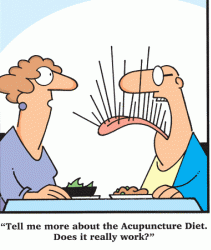
A cornerstone of CWeight loss 3 cartoonhinese medicine is that it looks at the whole person, not just the chief complaint. When a patient asks, “Can acupuncture help me lose weight?” the answer is unequivocally “Yes.” It’s a multistep process, however, and it’s not so simple as placing needles in a “magic” point.
The first step involves determining the causes of weight gain from the perspective of the organs and meridians (energy pathways). We achieve this through an examination of the tongue, the pulse, and the abdomen, through questioning about lifestyle and eating habits, and by reviewing the evidence of the AcuGraph system regarding the balance of qi in all the meridians.
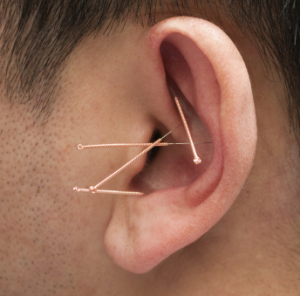
The next step involves treatment. Acupuncture can help re-balance the qi in the meridians so that the digestive and endocrine organs work more efficiently. We also use adjunctive tools, such as moxibustion (application of herbal heat to specific points in a way that nourishes their functions) and especially herbal medicine. Herbs carefully chosen for a specific individual make digestion more efficient, boosts the function of the endocrine and hormonal systems, and makes the human system more Weight loss 4resilient in the face of ongoing stress. Ear acupuncture is another therapy that helps reduce impulse eating, balance the emotions, and strengthen the digestive organs.

Finally, an equally important step to complete the treatment is patient education. Once it becomes clear which factors are contributing to a given person’s weight problem, it’s important to to receive guidance on achieving a healthier style of living and eating.

Let Chinese Medicine Make This Your Last Diet

Tired of yo-yo seesaw diets, pounds that creep back on, and not fitting into your clothes? Had enough of social ostracism, feeling sluggish, and wondering why you gain weight when you eat so much less than your friends? There is no magic acupuncture point for weight loss, but there is treatment tailored to your specific metabolic and emotional needs. Find out what’s making you fat—and let a 2000-year-old system of natural medicine help you to a lifestyle that includes a healthy weight.Use the Contact Me page  to call or email now or to schedule your appointment!Weight Loss 6 Vegetables

Visit Us On FacebookVisit Us On Linkedin