
Nausea and an upset stomach can make a regular day terrible. You might be dealing with everything from bloating and the discomfort of a stomach doing somersaults, to just feeling that your stomach is something that is wobbling around unsteadily. While Acupuncture for digestive problems may help manage certain symptoms, this uncomfortable feeling typically does not last long, although it can still be quite unpleasant.
Acupuncture is an alternative to medication for nausea. This therapy uses fine needles to stimulate specific points on the body to help relieve feelings of discomfort. Scientific research has examined acupuncture’s potential to alleviate nausea and various stomach issues with mixed results, depending on the condition and individual factors.
In this article, we review acupuncture’s role in nausea and upset stomach, outline what to expect during treatment, and offer guidance on seeking professional care.
Why Do Nausea and Stomach Upset Happen?
There are many causes of nausea or general stomach upset. Overeating, late dinner hours, excessive snacking, consuming spicy foods, emotional stresses, and acid reflux are some of the leading reasons for upset stomach and distension. Nausea and upset stomach caused by drugs, infections, allergies, and some medical conditions are also causes. Nausea associated with pregnancy is another common occurrence.
Knowing what to look for is helpful when you are seeking solutions. For instance, are you experiencing these sensations after eating? Does stress make them worse? Such observations can help a healthcare professional identify possible triggers.
Acupuncture for digestive problems and similar conditions is one integrative approach. Nevertheless, if an individual feels this way all the time or if it continues to be an issue, a biomedical doctor should be consulted.
How Does Acupuncture Address Digestive Symptoms?
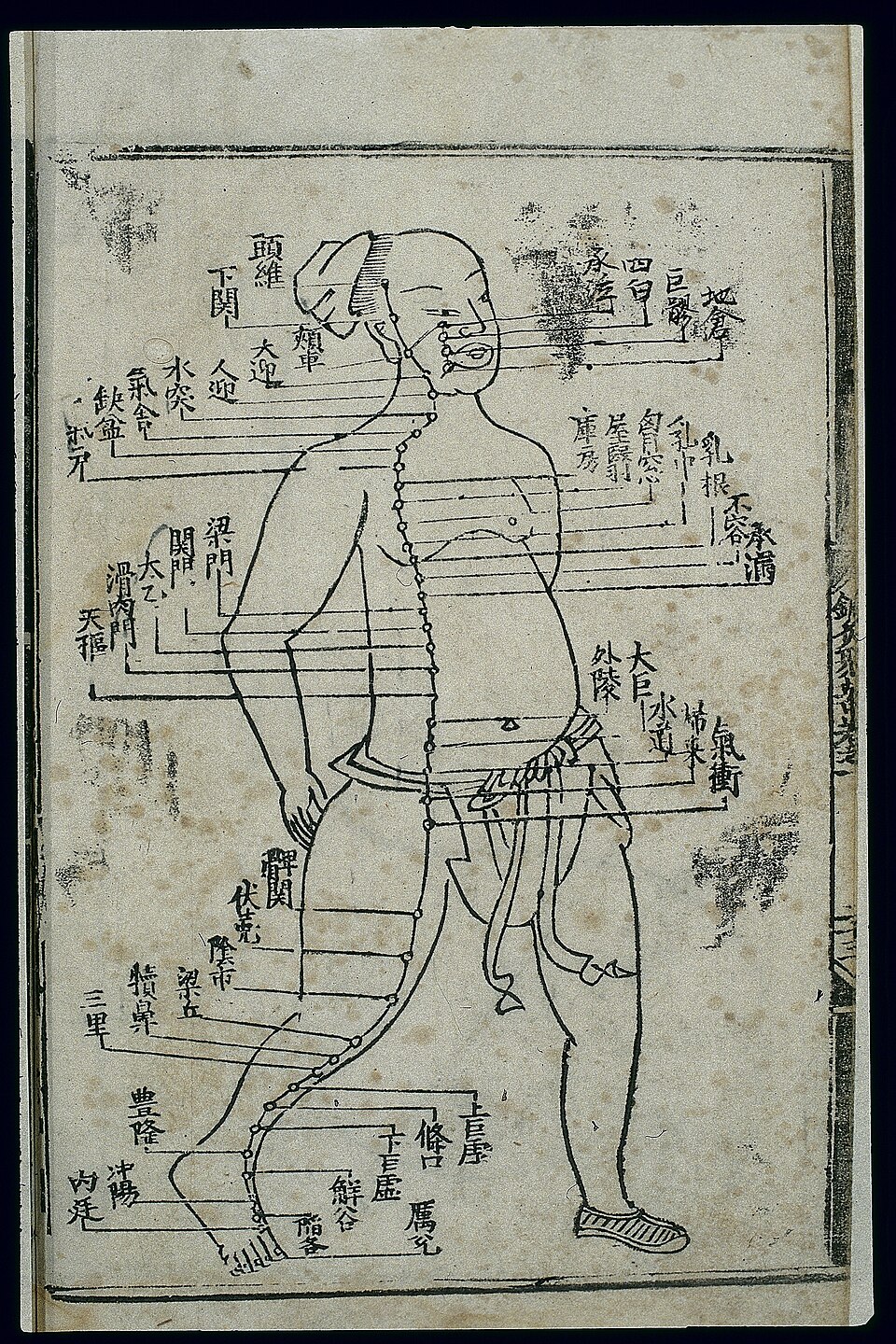
Acupuncture needles are inserted at various points on the body, with locations used based on several factors, including the condition being treated and the particular practitioner. Patients new to acupuncture are often surprised to find that the most effective acupoints might be far from the location of the symptoms—for example, acupoints on the foot, as shown by this ancient diagram of the Stomach meridian, can be helpful in treating nausea.
[Note from Sybil: Wikimedia Commons image attached]
Clinical trials have demonstrated that needling specific acupoints on the body effectively alleviates nausea experienced by patients receiving chemotherapy and after surgery. This seems to be a useful aspect of a comprehensive post-surgical recovery and chemotherapy management program.
The stimulation of nerves, muscles, and connective tissue is believed to help relieve pain and improve digestion. Researchers are studying how acupuncture affects the activity of the nerves and hormones that are involved with digestion. Acupuncture is an integrative treatment to help manage nausea and digestion alongside your regular source of medical care.
What Happens During an Acupuncture Session?
Before any acupuncture can begin, a process of evaluation according to Chinese medical tradition must occur. How does this happen? First, the practitioner looks at the tongue to discover clues about digestion, hydration, circulation, and the function of various internal organs. (Yes, the tongue contains a map of the entire body!) Next, the practitioner palpates the pulse on both hands—according to tradition, the pulse reflects information about 12 different organs. Dr. Ihrig also makes extensive use of abdominal palpation, a common practice in Japanese-style acupuncture. Examining the abdomen provides even more information about internal conditions and forms the basis for prescribing an herbal formula (when needed) that is specific to each individual.
Acupuncture needles are sterile, and most patients experience little or no discomfort. Rarely, patients experience a slight, momentary pinching sensation when a needle is inserted, or perhaps a twinge or sensation of numbness around the needled area. Dr. Ihrig uses Japanese-manufactured acupuncture needles exclusively; these are thinner and more gentle than typical Chinese needles used by the majority of acupuncture practitioners. As a result, most patients experience acupuncture as a relaxing and comfortable therapy.
Dr. Ihrig also uses moxibustion as part of every treatment. Moxibustion (moxa for short) is an Artemisia herb species that is manufactured in several different compressed forms. Moxa provides an infrared-like heat treatment that can be applied on top of a needle or on the skin and is very nourishing to the acupoint on which it is used.
Can Acupuncture Be Combined with Other Approaches?
Your regular physician might advise you to make lifestyle modifications based on factors that could contribute to nausea and stomach discomfort, for example, eating smaller, more frequent meals, reducing alcohol consumption, having your last meal of the day earlier in the evening, changing your medications, or managing stress.
Many Chinese medicine practitioners are also trained in the use of traditional herbal formulas, which combine multiple herbs to alleviate health conditions synergistically. Such traditional formulas are customized to the individual. If your acupuncturist has this training, inquire about the best herbal formula for your specific nausea symptoms.
Homeopathic remedies, which are made of extremely dilute natural substances, can be beneficial in some cases as well. For best results, one should consult a practitioner who has specific training in this field. Dr. Ihrig has been trained extensively and certified nationally in the use of homeopathic treatment.
Any OTC medication or supplement you are taking for nausea should be checked by a physician to determine whether it interacts with any medications you are taking. If you employ acupuncture, Chinese herbal medicine, homeopathy, or other integrative therapies to deal with your queasiness, inform your primary care physician to ensure that your other therapies do not conflict with your biomedical treatment plan.
Whereas acupuncture may help manage certain types of nausea, acupuncture pain treatment for general abdominal discomfort should always be based on the underlying cause and a professional’s assessment.
When Should You Seek Medical Attention?
When intense nausea does not cease or is accompanied by vomiting, abdominal pain, blood in the stool or hematemesis (blood in the vomitus), or if it leads to dehydration or fainting, it is time to see a doctor.
Additionally, see a medical professional if you have frequent or persistent nausea that affects your ability to eat and digest foods, and if it is accompanied by other abdominal symptoms such as bloating, stomach aches, or cramps.
Acupuncture, herbal medicines, and homeopathic remedies should not be seen as the sole alternatives to your doctor’s medical treatment. Treatment is case-dependent; a doctor will advise you on what is the best method of treatment according to the etiology and the evolution of the symptom.
Take the Next Step Toward Understanding Your Digestive Health
No one has to go through life in silence with sudden or constant nausea or stomach pain. We need to understand the causes, mechanisms, and patterns of these symptoms and find out what pain relief and nausea-reducing options are most appropriate in each case.
At Lotus Wellspring Healthcare, we can help you determine the most appropriate intervention for your situation. Whether you are considering Acupuncture for digestive problems or Acupuncture pain treatment, we are here to help you determine the best course of action and answer all of your questions.
Take the first step toward feeling better – schedule an appointment at Lotus Wellspring Healthcare by visiting our website or contacting us at (760) 854-4242 or (623) 444-2878.
Frequently Asked Questions
1. Can acupuncture help with nausea?
Acupuncture is an integrative treatment for nausea. Some research suggests that it could help lessen the severity of nausea side effects following chemotherapy and surgery. Not all therapies are safe for all kinds of nausea, so always talk to your healthcare team about this kind of therapy.
2. How many acupuncture sessions does it take to treat digestive problems?
Often, several sessions are required for treating this issue. The number depends on the nature and duration of the condition, coexisting health concerns, and personal factors. Acupuncture should be used as an integrative intervention for this condition, with a practitioner designing a detailed treatment plan based on the patient’s individual requests and circumstances.
3. Is acupuncture for stomach issues safe?
Acupuncture is a safe treatment when it is administered by a properly trained acupuncturist using sterile, single-use needles. Tell your acupuncturist if you have a bleeding disorder, are pregnant, have health conditions, or are taking medication.
4. Can acupuncture, Chinese herbal medicine, and homeopathic remedies be combined?
Acupuncture and traditional herbal medicine are both part of Chinese medicine. Acupuncture and homeopathy are separate fields; only combine these two if your practitioner is trained in both.

